Portable Sanitation Equipment is our Business!Terms in this list refers to your entire septic system, i.e.; septic tank and field, and deal with all septic related FAQs.
For the purpose of this site, installation refers to the installation of a septic system / tank / field or all of the above. FAQs in this category deal with questions related to septic installations and repairs.
Yes. State and County laws require that a permit be issued by the Health Department prior to constructing or making repairs to a septic system. We handle the permit process for you when we are hired to do your perk test. Which must be performed prior to septic repair and/or installation.
Terms in this category are a sub-category of the Septic FAQs. All questions here relate to and deal with Perk Tests.
You will need the following in order to have Brendel's perform a perk test for you:
A perk test determines the water solubility level of a given piece of property. That is, whether or not the soil can take water. For example, properties in a high water area or a marsh land usually will not perk because the water table is too high, and the soil pores have reach their solubility level (cannot absorb more fluid).
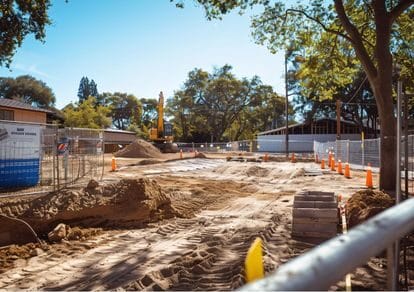
The perk test is performed where the septic tank and field lines converge, this is located by plotting the system. Once this is determined, a soil bore is dug with a back hoe to reveal a profile of the subsurface from grade to 48 inches. Based on the colors of the soil and physical texture, suitability for subsurface field lines can be determined. If soil is found to be suitable, three more post holes will dug and then saturated for a period of time.
For the purpose of our company, a pumping refers to pumping our a septic tank. Terms in this category relate to all FAQs dealing with septic pumpings.
You may pay for your septic pumping via: cash, check or charge.
Brendel's accepts all major credit cards, which are:
Mousing a system entails flushing a locator (called a mouse) from an inside facility and following the mechanism on it's path outside the house with equipment like that of a metal detector.
The major drawback to having your system moused is that the mouse will stop at any obstruction in the lines and can give a false reading.
In a word. No. We realize your time is valuable and therefore attempt to make service as convenient for you as possible.
Simply schedule your septic pumping for the day of your choice* and we will service your tank and leave a copy of the work order. You are then invoiced for the work from the work order turned into the billing department. You then may pay off of the invoice once it arrives at your home.
There are a couple of avenues available to you for tank location. The first option, most obviously, is also the cheapest route. You can:
Yes. We do provide digging services in addition to our pumping services. There is an extra charge for digging.
Digging charges are determined by estimating feet of earth removed from surface (ground level) to lid (tank lid). If, for example, we remove 2 and 3/4 feet of material, you would be charged for the third foot.
The price of a residential septic pumping is dependent on the amount of gallons your septic tank holds. If you are unsure of the gallon capacity of your septic tank, we will be unable to give you a definite quote until the tank is actually pumped out. In general however, the average prices for residential pumpings are:
A septic system handles waste-water in homes that are located in areas where public sewers are not currently available. The standard type of septic system features a tank (anaerobic tank) which holds all the waste-water leaving your home through drainpipes, and a system of trench and pipes that allow the waste-water to "percolate" through the soil back to the water table.
Having your system shot with a camera is one of the most effective ways of determining where you septic tank is located, however, it is also the most expensive route you can go, next to having your entire backyard excavated up (which we do not recommend).
The main piece of equipment used to camera the lines and tank looks just like a plumbers snake, but has a camera on the end of it. A toilet from one of the inside facilities must be removed in order to have this procedure performed. The snake is fed through the lines in your home, the camera on the end of the snake sends back live images of your lines to a monitor that is attached to the other end of the snake.
Check old sales records for your house. If the answer is not there, the previous homeowner may know. If that is not an option try checking with the city or township offices where you live. If you are still unable to determine an answer the only other way to find this information out is by having your system pumped out.
You may pay for your septic pumping via: cash, check or charge.
Brendel's accepts all major credit cards, which are:
Mousing a system entails flushing a locator (called a mouse) from an inside facility and following the mechanism on it's path outside the house with equipment like that of a metal detector.
The major drawback to having your system moused is that the mouse will stop at any obstruction in the lines and can give a false reading.
You will need the following in order to have Brendel's perform a perk test for you:
Yes. Bio-Tab is non-toxic to both humans and animals alike, contains no harsh or caustic chemicals, is nonpoisonous and non-corrosive. The active organisms in Bio-Tab are considered to be environmentally safe by the (EPA) Environmental Protection Agency.
Brendel's Septic Tank Service, LLC neither endorses this product nor takes any responsibility for the use of the same.
Bio-Tab is an easy, safe and effective way to revitalize and treat your home septic system. The tablets contain carefully selected strains of bacteria and enzymes, formulated to meet the specific needs of your home septic system.
Works well for: